

The British Antiques Company
Austinsuite Mid-Century Modern (MCM) Sideboard
Austinsuite Mid-Century Modern (MCM) Sideboard
Couldn't load pickup availability
A beautifully designed & crafted 1960s teak sideboard manufactured by Austinsuite of Great Britain.
Width: 182cm
Height: 78cm
Depth: 45cm
That is a beautiful example of Mid-Century Modern (MCM) British design. Your Austinsuite sideboard is a quintessential piece from the 1960s, a time when British furniture makers were heavily influenced by sleek, functional Scandinavian aesthetics.
Here are a few interesting points you can use as conversation starters:
1. The Designer: Frank Guille
Most Austinsuite pieces from this era were designed by Frank Guille. He was a heavyweight in the design world, having studied under the legendary Robin Day. Guille is famous for bringing "high design" to the masses—making furniture that looked like expensive Danish imports but was attainable for the average British family.
2. The "Sculpted" Handles
The most distinctive "interesting point" on your specific model is the organic, sculpted wooden handles.
The Detail: Unlike many mass-produced pieces that used cheap brass or plastic knobs, Austinsuite utilized solid teak or afromosia (African teak) for their handles.
The Feel: They are designed to be "tactile"—meaning they were shaped specifically to fit the human hand, a hallmark of the ergonomic movement in the 60s.
3. The Secret Drawer
If you look inside the top central drawer, you might find a classic Austinsuite "surprise."
The Lining: These were often lined with grey or red felt and included built-in wooden dividers for cutlery.
The Maker's Mark: Austinsuite usually placed their gold "Austinsuite London" stamp inside that top drawer. Finding it is like finding the signature on a painting.
4. A Story of Resilience
Austinsuite (F. Austin Leyton Ltd) has a fascinating history. During World War II, they had to stop making furniture entirely. Instead, they used their woodworking expertise to repair aircraft for the war effort. When the war ended, they pivoted back to furniture, using those same industrial techniques to create the high-quality, streamlined "utility" furniture that eventually evolved into the stylish sideboard you have today.
5. The "Afromosia" Contrast
Notice how the handles and the tapered legs are a slightly darker, richer shade than the rest of the body?
The main body is typically Teak veneer, but the structural parts (legs and handles) are often Afromosia. Designers used this contrast intentionally to give the piece depth and a more "architectural" look.
The Measurement for this elegant piece:
Length: 182.5cm
Width: 46cm
Height: 77.5cm
Materials
Materials
Dimensions
Dimensions
Care information
Care information
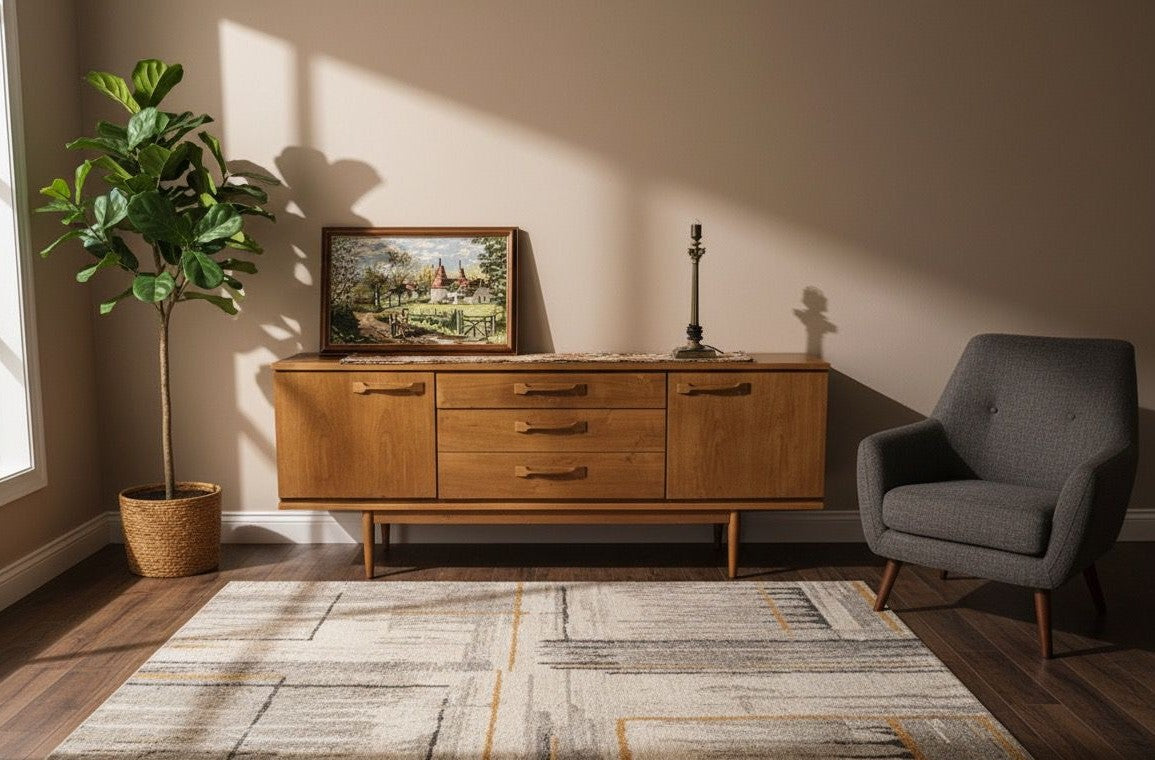
Image with text
Pair text with an image to focus on your chosen product, collection, or blog post. Add details on availability, style, or even provide a review.